Questions to Ask Your Dentist About Periodontal Treatment

Gum disease rarely announces itself with drama. More often, it starts quietly, with a little bleeding when you floss, mild tenderness along the gumline, or a comment at a routine cleaning that your pockets have deepened since last year. Patients are often surprised to learn that periodontal problems can progress with very little pain. By the time teeth feel loose or gums begin to recede noticeably, the disease process may already be advanced.
That is why the conversation you have with your dentist or periodontist matters so much. Periodontal Treatment is not one single procedure. It can range from more attentive home care and frequent maintenance visits to deep cleanings, antimicrobial therapy, gum surgery, bone grafting, or long-term management for a chronic condition. The right questions help you understand not just what is being recommended, but why, what the alternatives are, and what kind of commitment the treatment will require from you.
Patients often feel rushed in dental appointments, especially when unfamiliar terms start flying around, such as pocket depths, attachment loss, scaling and root planing, furcations, mobility, or osseous defects. A good clinician should be able to slow down and explain what those words mean in plain English. You do not need to become a dental expert overnight, but you should leave the office with a clear grasp of your diagnosis and your options.
Start with the diagnosis, not the procedure
One of the most useful habits I have seen in well-informed patients is this: they do not begin by asking, “How much does the deep cleaning cost?” They begin by asking, “What exactly is going on with my gums?”
That small shift changes the entire discussion. Periodontal Treatment should always be tied to a diagnosis. Bleeding gums alone can be caused by gingivitis, but it can also appear around fillings that trap plaque, poorly fitting crowns, dry mouth, smoking, diabetes, hormonal shifts, or home care that is inconsistent but fixable. Receding gums may stem from periodontal disease, but they may also relate to aggressive brushing, tooth position, clenching, or age-related changes. If the diagnosis is not clear, the treatment plan will not be clear either.
Ask your dentist to explain whether you have gingivitis or periodontitis, how severe it is, and which teeth or areas are affected. Severity matters. A patient with mild inflammation and shallow pockets is in a very different situation from someone with generalized bone loss and deep pockets around molars. The treatment, cost, and long-term outlook can differ dramatically.
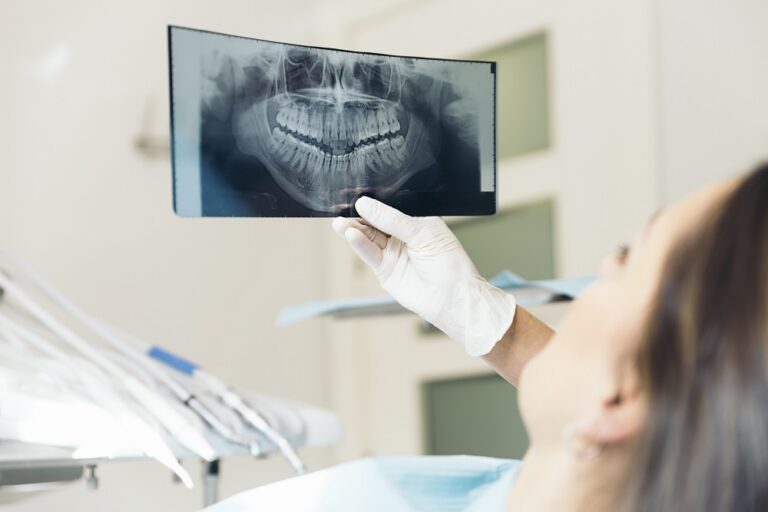
It is also worth asking how the diagnosis was made. Was it based on pocket measurements, bleeding scores, X-rays, tooth mobility, recession, bone loss, or a combination of those findings? Many patients nod through the appointment without realizing that the numbers being called out during an exam are the backbone of periodontal decision-making. A three-millimeter pocket is usually within a manageable range if there is no bleeding or deeper attachment loss. A five-, six-, or seven-millimeter pocket, especially with bleeding and radiographic bone loss, suggests a more serious problem that ordinary cleaning cannot fully address.
The questions that clarify what you are dealing with
When patients want to make smart decisions, these are the kinds of questions that tend to produce the most useful answers:
- What is my exact periodontal diagnosis, and how severe is it?
- Which teeth or areas are most affected, and what are the pocket depths there?
- What treatment are you recommending, and what result are you expecting from it?
- What happens if I delay treatment for a few months?
- What will I need to do at home to make this successful?
That is a short list, but it opens the door to a much richer discussion. If the clinician cannot answer those questions clearly, or seems annoyed that you asked, that is a signal in itself.
The “what happens if I wait?” question is especially important. Not every case requires immediate intervention, but some do. A few months may not change much in a stable, mild case with excellent home care. In an actively progressing case, especially in a smoker or a patient with uncontrolled diabetes, delay can mean more bone loss, greater recession, more difficult cleaning under the gums, and sometimes the loss of a tooth that might have been saved earlier.
Ask what the treatment is meant to accomplish
Patients sometimes hear the phrase “deep cleaning” and assume it is just a more thorough version of a regular cleaning. It is not. Scaling and root planing, one of the most common forms of non-surgical Periodontal Treatment, is designed to remove plaque, calculus, and bacterial byproducts from below the gumline and smooth root surfaces to help the tissue heal. It is a therapeutic procedure, not simply a cosmetic or preventive one.
That distinction matters because it helps you ask better follow-up questions. If scaling and root planing is recommended, ask what improvement your dentist expects to see afterward. Are they aiming to reduce inflammation and bleeding? Shrink pocket depths by one to two millimeters? Stabilize a condition that cannot be fully reversed? Avoid surgery? Create a cleaner environment for home care?
A good answer is usually specific. For example, if you have four- to six-millimeter pockets in several areas, your dentist might say that the goal is to reduce bacterial load, allow the gums to tighten, and reassess healing in four to eight weeks. If residual deep pockets remain around certain molars, those areas may later need referral to a periodontist. That kind of explanation tells you the treatment is being sequenced thoughtfully, not offered automatically.
It is also fair to ask whether antibiotics, localized antimicrobials, laser therapy, or irrigation are part of the plan, and whether they are truly necessary in your case. Some adjuncts can be helpful in selected situations, but none should be sold to you as magic. Periodontal disease improves because bacteria are disrupted mechanically, inflammation is controlled, and daily plaque management becomes sustainable. Add-ons may have a role, but they are not substitutes for sound fundamentals.
Understand the difference between maintenance and active treatment
This is one of the most common points of confusion in dental offices. Many patients assume that if they come every six months for cleaning, they are already covered. That is not always true.
A routine prophylaxis is intended for a mouth that is generally healthy or has only mild, reversible inflammation. Periodontal maintenance is different. It is used after active periodontal therapy in patients with a history of periodontitis, and it usually needs to occur more frequently, often every three to four months, because harmful bacteria repopulate below the gumline over time.
If your office recommends periodontal maintenance, ask why they believe you qualify for it and what findings support that recommendation. This is not merely a billing distinction. It reflects the biology of the disease and the risk of relapse. I have seen patients decline maintenance because they thought it was an upsell, only to return later with renewed inflammation and deeper pockets that were much harder to control.
At the same time, it is reasonable to ask whether your condition truly requires maintenance or whether an intensive phase of treatment followed by close reassessment might return you to a more stable category. The answer depends on your history, bone support, pocketing, smoking status, dexterity, medical conditions, and how well you clean at home.
If surgery is mentioned, ask what problem surgery solves
The word “surgery” tends to stop patients in their tracks. Some imagine something extreme, when in reality periodontal surgery can range from localized flap access to grafting procedures that are precise and manageable. Still, surgery should always have a clear purpose.
Ask whether the proposed surgery is intended to reduce pocket depth, regenerate lost support, cover exposed roots, improve access for cleaning, reshape bone, or remove diseased tissue that has not responded to non-surgical care. The reason matters because it affects both expectations and alternatives.
For instance, flap surgery may be recommended when deep pockets remain after scaling and root planing, particularly in areas that are difficult to clean because of root anatomy or bone defects. A gum graft may be advised to protect a tooth with recession, reduce sensitivity, or improve tissue thickness. Bone grafting around a specific defect may help support a tooth, but the predictability depends on the shape of the defect, the amount of remaining bone, whether smoking is involved, and how well plaque can be controlled during healing.
Ask your dentist or periodontist to describe what success looks like in your case. Are they trying to save a tooth for many years, improve comfort, make the area easier to clean, or simply slow future deterioration? There is a big difference between ideal improvement and realistic stabilization. Both can be worthwhile, but you deserve to know which is being offered.
Get specific about prognosis
Many patients never ask the most practical question of all: “What is the long-term outlook for this tooth, or for my mouth overall?”
Dentists sometimes hesitate to give precise predictions because prognosis is not an exact science. Still, experienced clinicians usually can tell you whether a tooth has a favorable, guarded, or poor outlook. That information is essential if you are deciding between major treatment and extraction, or between restoring one area heavily while others are also https://remingtonwnmj319.iamarrows.com/periodontal-treatment-for-gum-pockets-methods-that-work at risk.
A molar with severe bone loss, furcation involvement, and mobility may technically be treatable, but if you grind your teeth, smoke, miss maintenance visits, and struggle with home care, the prognosis may still be poor. By contrast, a front tooth with moderate bone loss in a highly motivated non-smoker who keeps excellent hygiene may remain stable for a long time with proper Periodontal Treatment and follow-up.
Ask what factors are helping your prognosis and what factors are hurting it. This often leads to one of the most honest parts of the conversation. Sometimes the limiting issue is not the procedure itself but the environment around it, such as uncontrolled blood sugar, dry mouth from medications, crowded teeth that trap plaque, or restorations with margins that are difficult to clean. A trustworthy dentist will discuss those realities instead of presenting treatment as if it exists in a vacuum.
Ask how your health history changes the plan
Periodontal disease does not happen separately from the rest of the body. Diabetes, smoking, vaping, autoimmune conditions, osteoporosis medications, pregnancy, stress, and certain prescription drugs can all influence gum health, bleeding, healing, and long-term stability.
If you have diabetes, ask how tightly your blood sugar needs to be controlled before treatment and during maintenance. Poor glycemic control is strongly associated with worse periodontal outcomes. If you smoke, ask plainly how much smoking reduces the chance of success. Many patients are startled by how direct the answer can be. Smoking impairs healing, masks bleeding, and is one of the strongest risk factors for disease progression and treatment failure.
If you take anticoagulants, immunosuppressive drugs, bisphosphonates, or medications that cause dry mouth or gum overgrowth, mention them and ask whether they change timing, healing expectations, or aftercare. These details are not side notes. They may alter whether treatment is done in stages, whether antibiotic coverage is considered, or whether your physician should be involved.
Clarify what the appointment will actually feel like
Fear often grows in the blank space between a recommendation and a real explanation. “You need periodontal treatment” can sound ominous if no one tells you what the visit is like.
Ask whether the procedure requires local anesthetic, how long each appointment usually takes, whether treatment is done by quadrant or full mouth, and what you are likely to feel afterward. For scaling and root planing, most patients do best with numbing because instruments have to reach below the gumline. Some feel only mild soreness afterward, while others experience tenderness, temporary sensitivity to cold, and slight gum shrinkage as inflammation resolves. None of that should come as a surprise.
If surgery is planned, ask about swelling, diet, activity restrictions, time off work, and how soon you can brush or floss the area normally. A patient who expects to “pop back into a meeting” after a grafting procedure is going to have a rough day if nobody sets expectations beforehand.
You should also ask what signs after treatment would be normal and what signs mean you should call the office. Mild oozing, temporary tenderness, and a little sensitivity may be routine. Increasing swelling, uncontrolled bleeding, fever, or pain that worsens after the first few days deserve attention.
Money matters, but timing matters too
Cost is a reasonable question, and avoiding it helps no one. Periodontal care can become expensive, especially when active treatment, maintenance, surgery, grafting, and restorative work all start to intersect. Still, the financial conversation works best when it follows the clinical one.
Ask for a breakdown of what is being recommended now, what might be needed later, and which parts are optional versus strongly advised. Ask whether the office can sequence treatment if budget is a concern. Sometimes the best path is to address the most unstable or symptomatic areas first, then reassess before moving into more elective correction.
It is also sensible to ask how often reevaluation will occur and whether additional treatment decisions will depend on your healing response. Dentistry is not always linear. A mouth that responds beautifully to non-surgical therapy may spare you further procedures. A mouth that continues to show deep bleeding pockets despite good care may point toward surgery or specialist management.
Be wary of treatment plans that present every possible future need as if it is equally urgent today. Good periodontal care is strategic. It adapts to biology, compliance, and response.
Know when a specialist opinion would help
General dentists manage many periodontal issues very well, especially early and moderate cases. But there are times when a periodontist brings valuable added expertise, such as advanced bone loss, persistent deep pockets after treatment, mucogingival problems, complex recession, implant-related inflammation, or surgical planning around key teeth.
You do not have to wait for your dentist to suggest referral. You can ask whether a periodontist’s evaluation would add anything in your case. That is not insulting. It is prudent. Strong clinicians generally welcome another informed set of eyes when the case is complicated, the prognosis is uncertain, or the patient wants reassurance before committing to surgery.
In some situations, the answer may be that the current treatment is straightforward and can be handled well in the general practice. In others, referral is the most efficient path. Either answer is useful if it is honest.
Home care is where treatment succeeds or fails
This is the least glamorous part of Periodontal Treatment, and often the most decisive. No in-office procedure can compensate for plaque that is allowed to accumulate daily around susceptible gums.
Ask your dentist to show you exactly where you are missing with brushing and flossing, or whether you would do better with interdental brushes, a water flosser, a power toothbrush, or a different flossing technique. Generic advice like “brush better” is not enough. The best home care instruction is targeted to your anatomy, dexterity, restorations, and risk level.
A patient with wide embrasures after bone loss may clean far more effectively with interdental brushes than with floss alone. Someone with bridges or implants may need threaders or specialty aids. A patient who brushes hard and has recession may need to change technique rather than simply increase effort.
Before you leave the appointment, make sure you know these practical points:
- Which areas are hardest for me to keep clean?
- What tools do you want me to use at home?
- How often should I return for reevaluation or maintenance?
- What habits are most likely to make my condition worse?
- How will we know if the treatment is working?
Those questions keep the plan connected to daily life. That is where periodontal stability is won or lost.
A brief word about expectations
Patients sometimes hope gums will “grow back” after treatment. Sometimes tissue tone improves and swelling subsides enough that the mouth looks healthier quickly. Sometimes recession becomes more noticeable after inflammation resolves because swollen tissue shrinks down to a healthier contour. That can alarm patients if no one prepared them for it.
Bone lost to periodontitis often cannot be fully restored, though certain defects can improve with regenerative procedures. Deep pockets can often be reduced, but not every site returns to textbook perfection. A realistic goal in many adults is a healthy, maintainable mouth with stable teeth, reduced inflammation, and a routine that keeps further loss to a minimum.
That may sound less dramatic than the idea of a complete reset, but in real practice it is often an excellent outcome.
Leave with a map, not just a recommendation
The best dental visits do not end with “We’ll get you scheduled.” They end with a map. You should know what condition you have, why the recommended treatment fits that condition, what alternatives exist, what the likely benefits and limits are, what your role will be at home, and how progress will be measured.
When patients ask thoughtful questions, the conversation improves for everyone. Dentists explain more precisely. Assumptions get corrected. Fear usually drops. Treatment decisions become clearer. And perhaps most important, the patient steps into the process as a participant rather than a passenger.
Periodontal disease is common, often manageable, and sometimes deceptively serious. A well-run discussion with your dentist can make the difference between reacting late and acting wisely. Ask the questions. The quality of the answers will tell you a great deal about the quality of the care.
Avra Dental
Address: 1708 S Victoria Ave B, Ventura, CA 93003
Phone number: (805) 941-1001
FAQ About Periodontal Treatment
Can a dentist get rid of periodontal disease?
A dentist or gum specialist (periodontist) cannot fully cure or reverse advanced periodontal disease (periodontitis), but they can successfully stop its progression and manage the infection.
Is periodontitis very serious?
Yes, periodontitis is a very serious, advanced form of gum disease that destroys the bone and tissues supporting your teeth.
How is stage 2 periodontal disease treated?
Stage 2 periodontal disease (early to moderate periodontitis) is primarily treated with non-surgical deep cleaning procedures like scaling and root planing to remove bacteria and tartar below the gumline.